The Moment Software Started Building Itself: Why AI-Native Development Matters Now
Last year, a friend of mine — a senior engineer at a mid-stage fintech startup — called me at 11 PM, not to vent about a production outage, but because he was genuinely unsettled. “I just watched a junior dev on my team scaffold an entire microservice in forty minutes,” he said. “The architecture was clean. The tests passed. She used an AI pair programmer for about 90% of it.” He paused. “It would’ve taken me a full day, maybe two. And I’ve been doing this for fifteen years.” It wasn’t fear in his voice, exactly. It was the unmistakable sound of someone realizing the ground had shifted beneath them — permanently.
That conversation stuck with me because it captures something that’s easy to miss if you’re only reading the headlines about generative AI. This isn’t just about code completion or fancy autocomplete. We’ve crossed a threshold where AI isn’t merely assisting software development — it’s becoming a foundational layer of how software gets conceived, built, tested, shipped, and maintained. That’s what “AI-native development” actually means, and it’s a fundamentally different paradigm from what came before.
So What Changed? Why Now?
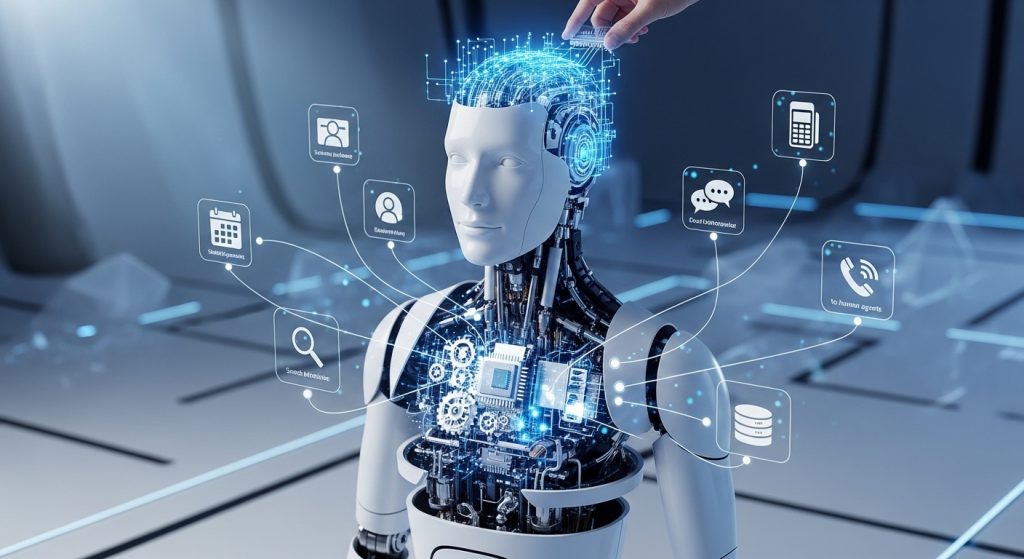
Developers have had access to tooling for decades — linters, IDEs, static analysis, CI pipelines. But those tools were always reactive. You wrote the code, and the tools checked your work. AI-native development flips that relationship. The AI participates in the creative act itself. It suggests architecture. It generates boilerplate and business logic. It anticipates edge cases you haven’t thought of yet. And critically, it learns from the codebase it’s embedded in, getting more useful over time rather than less.
Several forces converged to make this moment inevitable:
- Large language models reached a tipping point in code comprehension. Models trained on billions of lines of open-source code don’t just pattern-match syntax — they understand intent, context, and idiomatic patterns across dozens of languages and frameworks.
- Compute costs dropped while model capabilities surged. Running inference on sophisticated models is now cheap enough to embed directly into developer workflows, in real time, without noticeable latency.
- The software industry’s own complexity demanded it. Modern applications are sprawling ecosystems of microservices, APIs, cloud infrastructure, and third-party integrations. The cognitive load on human developers was already unsustainable. AI didn’t just arrive — it was pulled in by necessity.
- Developer experience became a competitive advantage. Companies realized that the teams shipping fastest weren’t necessarily the biggest — they were the ones with the best tooling. AI-native practices became the ultimate force multiplier.
AI-Native vs. AI-Assisted: The Distinction That Matters
Here’s where a lot of organizations get confused, and it’s worth being precise. Bolting a code-suggestion tool onto your existing workflow is AI-assisted development. It’s useful. It’s also table stakes at this point. AI-native development is something structurally different: it means designing your entire software lifecycle — from ideation through post-deployment monitoring — with AI as a first-class participant, not an afterthought.
Think of it this way. An AI-assisted team uses Copilot to write functions faster. An AI-native team uses AI to generate initial designs from product requirements, automatically produce and maintain test suites, monitor production systems for anomalies, and proactively suggest refactors when technical debt accumulates. The AI isn’t a plugin. It’s woven into the DNA of how the team operates.
Why This Matters for Every Software Organization — Not Just Big Tech
There’s a temptation to think of AI-native development as something only Google or OpenAI needs to worry about. That’s a dangerous miscalculation. The startups and mid-market companies adopting these practices today are compressing timelines that used to take quarters into weeks. They’re shipping with fewer bugs, smaller teams, and lower infrastructure costs. If your competitors are operating in that mode and you’re not, the gap doesn’t close — it compounds.
And this isn’t speculative futurism. It’s happening right now, in production, at companies you compete with. The moment software started building itself wasn’t a dramatic, singular event. It was a quiet accumulation of capabilities that, taken together, changed everything. The only real question left is whether your organization recognizes the shift — and adapts before the cost of catching up becomes the cost of irrelevance.
From Blank Canvas to Working Code: How AI Copilots Are Redefining the Design and Prototyping Phase
There’s a moment every developer knows intimately — the blinking cursor on an empty file, the blank IDE staring back at you like a dare. You’ve got a rough idea in your head, maybe a few scribbles on a whiteboard or a Figma mockup someone tossed into Slack. And now you need to turn that into something real. Historically, this phase — the messy, uncertain gap between “concept” and “first working prototype” — has been one of the most time-consuming and cognitively expensive parts of building software. It’s where projects stall, where architecture decisions get made under pressure, and where teams burn days just scaffolding boilerplate before writing a single line of meaningful logic.
AI copilots have fundamentally changed the economics of this moment. And I don’t mean they’ve made it slightly faster. I mean they’ve restructured what the design and prototyping phase even is.
The Prototype Is No Longer a Throwaway
Traditionally, prototypes were disposable. You’d hack something together to validate an idea, show it to stakeholders, get a nod, and then throw it all away to build the “real” version with proper architecture. That cycle was expensive, but it was the cost of de-risking decisions early.
With AI-native development tools — GitHub Copilot, Cursor, Codeium, Amazon CodeWhisperer, and the growing ecosystem around them — the prototype increasingly becomes the foundation. Here’s why: when an AI copilot can generate well-structured, idiomatic code from natural language prompts and contextual cues, the gap between “quick and dirty proof of concept” and “production-grade starting point” shrinks dramatically. Developers are finding that what used to be a throwaway spike is now clean enough to iterate on directly.
This doesn’t mean AI writes perfect code out of the gate. It doesn’t. But it writes structurally sound code fast enough that the human developer’s role shifts from “typist who also thinks” to “architect who also edits.” That’s a meaningful distinction.
Design-to-Code Is Becoming a Conversation, Not a Handoff
One of the most underappreciated shifts happening right now is the collapse of the traditional design-to-development handoff. Tools are emerging that let designers and developers operate in a shared AI-augmented space where:
- Natural language descriptions generate UI component scaffolds in seconds — not pixel-perfect, but structurally accurate enough to start iterating immediately.
- Design system tokens (colors, spacing, typography) can be ingested by AI copilots to ensure generated code aligns with existing brand and UX standards from the first keystroke.
- Multi-modal AI models can interpret wireframes, screenshots, or even hand-drawn sketches and produce functional front-end code — turning what used to be a multi-day translation exercise into a conversation that takes minutes.
- API contracts and data models can be described in plain English and turned into typed interfaces, database schemas, and even mock data — collapsing backend prototyping timelines significantly.
The result? The feedback loop between “what we want to build” and “something we can actually click through and test” has gone from weeks to hours in many teams. That’s not hyperbole — it’s the lived experience of engineering organizations that have leaned into these tools deliberately rather than treating them as glorified autocomplete.
What This Actually Looks Like in Practice
Let’s get concrete. Imagine a product team exploring a new feature — say, a dashboard for monitoring real-time supply chain data. In a pre-AI workflow, you’d see something like this: a product manager writes a spec, a designer creates mockups over several days, an engineering lead reviews and estimates, a developer spends a sprint scaffolding the frontend, wiring up mock APIs, and building out the basic interaction model. Two to three weeks before anyone can meaningfully interact with the thing.
In an AI-native workflow, a developer sits down with the designer, describes the dashboard layout and data requirements to an AI copilot, generates a working React (or Vue, or Svelte — the copilot doesn’t care) component tree in under an hour, hooks it up to auto-generated mock endpoints, and has a clickable, data-populated prototype by end of day. The designer gives feedback on running code, not static mockups. The product manager can interact with real UI, not a Figma presentation. Decisions that used to require imagination now require observation.
That compression of the feedback loop isn’t just a productivity gain. It’s a quality gain. Teams catch bad assumptions earlier. They explore more alternatives because the cost of trying something is so low. They make better decisions because they’re reacting to reality, not renderings.
The Risks You Need to Watch For
None of this comes without trade-offs, and it would be irresponsible to pretend otherwise. A few things to keep your eyes on:
- Architectural drift: When code is generated quickly, it’s tempting to skip the architectural review. AI copilots optimize for the immediate context — they don’t inherently understand your system’s long-term scalability requirements or your team’s conventions beyond what’s in the current file or repository. Without deliberate oversight, you can end up with a prototype that works beautifully but is architecturally incompatible with your production environment.
- False confidence: A working prototype feels like progress, and it is — but it can also create premature confidence in a solution that hasn’t been stress-tested. The speed of AI-assisted prototyping means teams need to be even more disciplined about distinguishing “demo-ready” from “production-ready.”
- Skill atrophy in foundational design thinking: If junior developers always start with AI-generated scaffolds, they may never develop the deep understanding of why certain architectural patterns exist. The copilot knows what pattern to use; it doesn’t teach you when that pattern will fail at scale. Teams need to invest in mentorship and code review practices that counterbalance this.
The Bottom Line
The design and prototyping phase used to be where ideas went to wait. Wait for specs. Wait for mockups. Wait for scaffolding. Wait for the first build that actually ran. AI copilots haven’t just accelerated this phase — they’ve changed its fundamental character. It’s no longer a sequential pipeline of handoffs. It’s an iterative, conversational, almost improvisational process where ideas become interactive artifacts in hours instead of weeks.
For teams willing to adapt their workflows — not just bolt an AI tool onto their existing process, but genuinely rethink how design, prototyping, and early development interact — the competitive advantage is real and compounding. The blank canvas isn’t so blank anymore. And that blinking cursor? It’s got a collaborator now.
Automated Testing, Continuous Learning: The New Quality Assurance Paradigm
Let’s be honest about something: traditional QA has always been the part of the software lifecycle that everyone respects in theory and resents in practice. Developers write tests because they have to, not because they want to. Test suites balloon into unwieldy monsters that take forty-five minutes to run. Edge cases slip through because no human being can realistically anticipate every way a user will try to break something. And manual QA? It’s thorough, sure — but it’s also slow, expensive, and fundamentally unable to scale at the pace modern teams need to ship.
AI-native development doesn’t just improve this process. It rewires it from the ground up.
From Writing Tests to Generating Them
The most immediate shift is in test generation itself. AI models trained on massive codebases can now analyze a function, understand its intent, and automatically generate unit tests that cover not just the happy path but the weird, uncomfortable edge cases that developers routinely miss. We’re talking about boundary conditions, null handling, race conditions, type coercion quirks — the stuff that causes production incidents at 2 AM on a Friday.
What makes this genuinely different from older automated testing tools is context awareness. Previous generations of test automation were essentially scripted — you told the tool what to test and how. AI-native testing tools infer what should be tested based on the code’s behavior, its dependencies, and even its change history. They don’t just execute; they reason.
Continuous Learning: Tests That Get Smarter Over Time
Here’s where things get really interesting. In a traditional pipeline, your test suite is static. Someone writes a test, it either passes or fails, and it stays exactly as-is until a human updates it. AI-native QA introduces a feedback loop that fundamentally changes this dynamic:
- Production incident analysis: When bugs make it to production (and they will — perfection isn’t the goal here), AI systems can trace the root cause back through the pipeline and automatically generate new tests that would have caught the issue. Your test suite literally learns from its own failures.
- Behavioral pattern recognition: AI models can monitor how real users interact with the application and identify testing gaps. If users consistently hit a workflow that your test suite doesn’t cover, the system flags it — or better yet, generates coverage for it automatically.
- Flaky test detection and resolution: Every engineering team has that test. The one that fails intermittently for no apparent reason, wastes everyone’s time, and eventually gets ignored. AI-native tools can identify flaky tests, diagnose the underlying cause (timing issues, environment dependencies, non-deterministic behavior), and suggest or implement fixes.
- Intelligent test prioritization: Instead of running your entire suite on every commit, AI can analyze which code paths were actually affected by a change and run only the relevant tests first. Full suite still runs, but you get fast feedback on what matters most within seconds, not minutes.
Visual and Functional Testing at Scale
AI has also cracked open a domain that was notoriously painful to automate: visual regression testing. Modern AI-powered tools can compare UI states with human-like perception, distinguishing between intentional design changes and actual bugs. They understand that a button moving two pixels because of a CSS refactor is fine, but that same button disappearing entirely is not. This sounds simple, but pixel-diff tools have been getting this wrong for years, flooding teams with false positives that erode trust in the testing process.
On the functional side, AI agents can now simulate complex user journeys — multi-step workflows, form submissions, authentication flows — without brittle, hand-coded Selenium scripts. They adapt when the UI changes. They retry intelligently. They report failures in plain language that actually helps you fix the problem instead of dumping a stack trace and wishing you luck.
The Cultural Shift This Enables
The downstream effect of all this is arguably more important than the technology itself. When testing becomes less painful, developers do more of it. When test generation is automated, coverage goes up without anyone grinding through boilerplate. When the feedback loop is tight and intelligent, quality becomes a continuous property of the system rather than a gate you pass through right before release.
This is the real paradigm shift: QA stops being a phase and becomes a characteristic. It’s not something you do at the end. It’s something the system does constantly, everywhere, getting better every single day without anyone having to mandate it in a sprint planning meeting.
That said, this doesn’t eliminate the need for human judgment in quality assurance — it elevates it. Instead of spending their time writing repetitive assertions, QA engineers and developers can focus on exploratory testing, security edge cases, and the kind of creative, adversarial thinking that AI models still can’t replicate well. The boring parts get automated. The interesting parts get more attention. That’s not a bad trade.
Shipping Faster Without Breaking Things: AI-Driven CI/CD and Deployment Pipelines
Here’s the dirty secret of modern software delivery: most teams aren’t slow because they write code slowly. They’re slow because the space between “code complete” and “code in production” is a minefield of flaky tests, manual approvals, configuration drift, and deployment anxiety. The CI/CD pipeline was supposed to fix all of this. And it did — partially. But traditional pipelines are still fundamentally dumb. They execute a predetermined sequence of steps, and when something goes sideways, a human has to figure out why. AI-native CI/CD changes that equation entirely.
Think about what happens in a typical deployment pipeline today. A developer pushes code, a build kicks off, a suite of tests runs, and if everything passes, the artifact moves to staging — maybe production. The problem? That pipeline treats every change the same way. A one-line copy fix gets the same 45-minute gauntlet as a database schema migration. An AI-driven pipeline doesn’t do that. It understands the blast radius of a change. It analyzes the diff, maps it against the dependency graph, and dynamically selects which tests actually need to run. The result isn’t just faster builds — it’s intelligently faster builds.
Smart Test Selection and Prioritization
This is where the impact hits first and hardest. AI models trained on your repository’s history can predict which tests are most likely to fail for a given changeset. Instead of running 12,000 tests every time, the pipeline runs the 200 that matter, flags the results, and queues the rest as a background verification. Teams adopting this approach are seeing CI times drop by 60-80% without any reduction in defect detection. That’s not a marginal improvement — that’s a fundamentally different developer experience.
And it goes deeper than selection. AI can identify tests that are perpetually flaky — the ones that fail randomly, waste everyone’s time, and erode trust in the pipeline. Rather than just flagging them, modern AI-native tools can quarantine flaky tests, analyze their failure patterns, and even suggest fixes. The pipeline becomes self-curating.
Deployment Risk Scoring
One of the most powerful capabilities emerging in AI-driven deployment is real-time risk assessment. Before a release candidate hits production, an AI model evaluates multiple signals:
- Code complexity and churn: How much changed, and in how volatile an area of the codebase?
- Historical incident correlation: Have similar changes caused outages before?
- Dependency health: Are upstream or downstream services stable right now?
- Time-of-day and traffic patterns: Is this the worst possible moment to deploy?
- Author experience: Not to gatekeep, but to calibrate review depth — a junior developer’s first change to the payment service deserves extra scrutiny.
The output is a deployment risk score — not a binary go/no-go, but a nuanced assessment that helps teams make informed decisions. High-risk deployments might automatically trigger canary releases with tighter monitoring thresholds. Low-risk ones might skip staging entirely and go straight to a progressive rollout. The pipeline adapts its own behavior based on context.
Intelligent Rollbacks and Progressive Delivery
Traditional rollback strategies are reactive. Something breaks, an alert fires, someone wakes up, investigates, and eventually runs the rollback script. AI-native pipelines compress that timeline dramatically. They monitor deployment health metrics in real time — error rates, latency percentiles, resource consumption, even user behavior anomalies — and can initiate automated rollbacks within seconds of detecting degradation.
But the really interesting part isn’t the rollback itself. It’s the progressive delivery logic that often prevents the need for one. AI-driven canary analysis can compare the behavior of new code against the baseline with statistical rigor that no human operator could match in real time. It’s watching hundreds of metrics simultaneously, adjusting traffic splits dynamically, and making promotion or rollback decisions with a level of precision that turns deployments from high-stakes events into routine, boring operations. And boring deployments are exactly what you want.
Configuration and Infrastructure Intelligence
Deployment failures aren’t always about bad code. A huge percentage of production incidents trace back to misconfigured infrastructure, environment drift, or incompatible feature flags. AI-native pipelines are starting to tackle this by learning what a “healthy” configuration looks like and flagging deviations before they cause problems. They can detect when a staging environment has drifted from production, when a new environment variable is missing, or when a feature flag combination creates an untested state.
This is the kind of work that used to live entirely in the heads of senior DevOps engineers — the tribal knowledge of “oh, you also need to update that config when you change this service.” AI doesn’t replace that expertise, but it codifies it, makes it available at 3 AM, and applies it consistently across every single deployment.
The Cultural Shift This Enables
Here’s what matters most: when your pipeline is genuinely intelligent — when it selects the right tests, scores risk accurately, deploys progressively, and rolls back autonomously — something changes in the team’s psychology. Deployment fear evaporates. And when deployment fear evaporates, teams ship more frequently. When they ship more frequently, each individual deployment gets smaller. When deployments get smaller, they get safer. It’s a virtuous cycle, and AI is the catalyst that finally makes it real for teams that have been stuck in the “we deploy every two weeks because we’re scared” pattern.
The goal was never just speed. It was confidence at speed. AI-driven CI/CD pipelines are delivering exactly that — turning the deployment pipeline from a bottleneck into a competitive advantage.
Self-Healing Systems and Predictive Maintenance: What Happens After Launch
Here’s the dirty secret of software development that nobody talks about at launch parties: shipping is not the finish line. It never was. Historically, the moment your code hits production is the moment the real anxiety begins. Will it scale? Will that edge case you half-tested at 2 AM crater the database? Will some microservice quietly start leaking memory until everything topples like dominoes at 3 AM on a Saturday? In the traditional lifecycle, post-launch meant war rooms, bleary-eyed on-call rotations, and a Slack channel that never stopped pinging. AI-native development is fundamentally rewriting that story.
Self-healing systems aren’t science fiction anymore — they’re becoming table stakes for any serious production environment. The concept is deceptively simple: instead of waiting for a human to notice something is wrong, diagnose it, and push a fix, the system itself detects anomalies, determines the root cause, and executes a remediation — often before a single user is affected. We’re talking about AI agents that can automatically roll back a bad deployment, restart a failing service, reroute traffic away from a degraded node, or even adjust resource allocation in real time based on observed behavior patterns.
From Reactive Firefighting to Predictive Intelligence
The real paradigm shift isn’t just in the “healing” part — it’s in the “predicting” part. Traditional monitoring tells you what already broke. AI-native observability tells you what’s about to break. Machine learning models trained on your system’s historical telemetry data — latency patterns, error rates, CPU utilization curves, memory consumption trends — can identify the subtle signatures of an impending failure hours or even days before it manifests.
Think about what that means practically. Instead of your SRE team getting paged at midnight because a service crashed, they get a notification on Tuesday afternoon that says: “Based on current memory growth patterns in the order-processing service, we predict an OOM event within 48 hours. Here are three recommended actions, ranked by impact.” That’s not incremental improvement. That’s a fundamentally different relationship with production infrastructure.
What AI-Native Post-Launch Actually Looks Like
- Anomaly detection that learns your normal: AI models baseline what “healthy” looks like for your specific system — not generic thresholds some engineer set six months ago and forgot about. They adapt as your traffic patterns evolve, as you deploy new features, as user behavior shifts seasonally.
- Automated incident response playbooks: When an issue is detected, AI doesn’t just alert — it executes. It can trigger predefined remediation workflows, and increasingly, it can compose novel responses by reasoning about the specific failure mode it’s observing.
- Intelligent capacity planning: Predictive models forecast demand spikes based on historical data, marketing calendars, and even external signals, then pre-scale infrastructure accordingly. No more over-provisioning “just in case” and bleeding money on idle compute.
- Dependency risk mapping: AI continuously analyzes your service dependency graph and flags fragile coupling points — the places where a single failure would cascade. It can recommend architectural changes before those weaknesses are exploited by real-world conditions.
- Log and trace correlation at superhuman speed: When something does go wrong, AI-powered root cause analysis can sift through millions of log lines, traces, and metrics across dozens of services in seconds, surfacing the actual cause rather than just the symptom.
The Trust Calibration Problem
Now, let’s be honest about the tension here, because glossing over it would be irresponsible. Giving an AI system the authority to modify production — to restart services, to roll back deployments, to reroute traffic — requires a level of trust that most engineering organizations haven’t fully calibrated yet. And they shouldn’t hand it over blindly.
The smartest teams are adopting a graduated autonomy model. Start with AI that observes and recommends. Let it prove its accuracy over weeks and months. Then graduate to AI that acts but notifies. Eventually, for well-understood failure modes with proven remediation paths, you let it act autonomously. The key is that humans remain in the loop for novel situations — the weird, unprecedented failures that require creative reasoning and contextual judgment that AI still struggles with.
This isn’t about removing humans from operations. It’s about removing the soul-crushing, repetitive toil from operations so that your best engineers can focus on the genuinely hard problems — the architectural decisions, the capacity strategy, the reliability investments that compound over time.
The Economic Argument Is Already Won
If the technical argument doesn’t convince you, the economics will. Downtime is expensive — not just in direct revenue loss, but in customer trust erosion, SLA penalties, and the opportunity cost of your most talented engineers spending their time firefighting instead of building. Organizations that have adopted AI-native post-launch practices consistently report dramatic reductions in mean time to detection (MTTD) and mean time to resolution (MTTR). Some are seeing incident volumes drop by 40-60% within the first year, simply because issues are caught and resolved before they escalate into incidents at all.
The software lifecycle doesn’t end at deployment. In an AI-native world, it evolves into something more like a living system — continuously monitored, continuously learning, continuously adapting. And the teams that embrace this shift aren’t just running more reliable software. They’re sleeping better at night. Which, honestly, might be the most compelling argument of all.
The Human Developer in an AI-Native World: Evolving Roles, Not Disappearing Ones
Let’s get the uncomfortable question out of the way first: No, AI is not coming for your job as a developer. But it is coming for the version of your job that you’re doing today. And honestly? That’s a good thing.
Every major technological shift in software development — from assembly to high-level languages, from monoliths to microservices, from on-prem to cloud — has triggered the same existential panic. And every single time, the developers who adapted didn’t just survive; they became exponentially more valuable. AI-native development is no different, except the pace of change is faster and the stakes feel higher because the tool in question can actually write code that compiles and runs.
From Code Writer to System Architect and Orchestrator
Here’s the shift that’s already underway: the developer’s core value is migrating up the abstraction stack. When an AI copilot can generate a functional CRUD API in seconds, the person who typed that out manually for years isn’t obsolete — they’re freed up. Freed up to focus on system design, integration strategy, edge case reasoning, and the kind of architectural thinking that no model can reliably do on its own.
Think of it this way. The best developers have always been the ones who understood why something should be built a certain way, not just how. AI handles the “how” with increasing competence. The “why” — the context, the trade-offs, the business logic that doesn’t live in any documentation — that’s still profoundly human territory.
- Prompt engineering and AI orchestration are becoming genuine skills. Knowing how to decompose a complex problem into the right sequence of AI-assisted steps is a craft in itself.
- Code review is more critical than ever. AI-generated code can be syntactically perfect and logically wrong. Developers are shifting into a quality gatekeeping role that demands deeper understanding, not less.
- Domain expertise becomes the differentiator. A developer who deeply understands healthcare compliance, financial regulations, or supply chain logistics brings context that no foundation model has been trained to prioritize correctly.
- Ethical judgment and bias detection now sit squarely in the developer’s lane. When AI suggests a solution, someone needs to ask whether it’s the right solution — not just a functional one.
The Rise of the “Full-Stack Thinker”
AI-native development is blurring the traditional boundaries between roles. When a single developer can leverage AI to scaffold a frontend, generate backend logic, write infrastructure-as-code, and draft test suites — all in the same afternoon — the old distinctions between “frontend dev,” “backend dev,” and “DevOps engineer” start to feel arbitrary. What emerges instead is a generalist with depth: someone who can think across the entire stack and use AI as a force multiplier at every layer.
This doesn’t mean specialization is dead. Far from it. But it does mean that specialists who can’t communicate across boundaries, who can’t see how their piece fits into the larger system, will find themselves increasingly sidelined. The most effective developers in an AI-native world are T-shaped — deep in one area, but broad enough to orchestrate AI tools across the full lifecycle.
New Roles That Didn’t Exist Two Years Ago
We’re already seeing job titles and responsibilities emerge that would have sounded like science fiction in 2021:
- AI Integration Engineers — specialists who focus on embedding AI capabilities into existing products and workflows without breaking what already works.
- Model Behavior Analysts — developers who evaluate and tune AI outputs for consistency, safety, and alignment with product goals.
- Developer Experience (DevX) Architects — people who design the internal toolchains and AI-assisted workflows that make entire engineering teams more productive.
- Human-in-the-Loop Designers — engineers who build the feedback mechanisms that keep humans meaningfully involved in AI-driven processes.
The Soft Skills Premium
Here’s something that catches a lot of engineers off guard: as AI handles more of the mechanical coding work, the skills that matter most start looking suspiciously… non-technical. Communication. Stakeholder management. The ability to translate a vague business requirement into a precise technical specification that an AI tool can actually work with. Critical thinking about whether the generated output actually solves the right problem.
The developers who thrive in an AI-native world won’t be the ones who memorized the most algorithms. They’ll be the ones who can sit in a room with a product manager, a designer, and a data scientist, synthesize competing priorities, and then direct AI tools to build the right thing — not just build the thing right.
The role isn’t disappearing. It’s growing up. And for developers willing to evolve with it, the ceiling has never been higher.
Rethinking Technical Debt: How AI-Native Practices Tackle Legacy Challenges Head-On
Let’s be honest about something the industry doesn’t love admitting: technical debt isn’t just an inconvenience. It’s the silent killer of velocity, morale, and sometimes entire products. Every engineering team has that one service — the one nobody wants to touch, the one where a single-line change triggers a cascade of mysterious failures, the one that was “temporary” four years ago. Traditional approaches to managing technical debt have largely amounted to negotiating with product managers for cleanup sprints that never quite materialize. AI-native development is finally changing that equation, and not in the way most people expect.
The fundamental shift here isn’t that AI magically rewrites your legacy codebase overnight. That’s a fantasy, and anyone selling it is lying to you. What AI-native practices actually do is attack technical debt at three critical leverage points: detection, prioritization, and incremental remediation — all woven into the daily workflow rather than treated as a separate, perpetually deferred initiative.
Detection: Seeing Debt Before It Compounds
One of the most powerful applications of AI in the software lifecycle is its ability to identify technical debt as it’s being created — not six months later during a painful architecture review. Modern AI-powered code analysis tools go far beyond traditional linters or static analyzers. They understand patterns at a semantic level: recognizing when a developer is implementing a workaround that duplicates logic elsewhere, flagging architectural drift from established conventions, or identifying dependencies that are quietly becoming liabilities.
Think of it as a financial advisor who taps you on the shoulder every time you’re about to take on high-interest debt. The code still ships — sometimes you genuinely need that shortcut — but now the decision is conscious and documented, not invisible.
- Codebase-wide pattern recognition: AI models trained on your repository can detect inconsistencies across services that human reviewers would miss simply because no single person holds the entire system in their head anymore.
- Dependency risk scoring: Instead of discovering that a critical library has been abandoned when it’s already a security vulnerability, AI-native tools continuously assess the health and trajectory of your dependency tree.
- Complexity hotspot mapping: By analyzing commit history, bug frequency, and code complexity together, AI can pinpoint exactly which modules are accumulating debt fastest — and which ones are actually costing you the most in developer time.
Prioritization: Knowing What Actually Matters
Here’s where things get genuinely interesting. Historically, prioritizing technical debt has been a political exercise as much as a technical one. The loudest engineer or the most recent outage tends to drive the agenda. AI-native practices bring data to a conversation that has traditionally been dominated by gut feelings.
By correlating code quality metrics with business outcomes — deployment frequency, incident rates, time-to-resolution, even developer onboarding speed — AI tools can quantify the real cost of specific debt items. That crusty authentication module might look ugly, but if it rarely changes and never causes incidents, it’s probably not where your attention should go. Meanwhile, that “mostly fine” data pipeline that three teams touch every week and that accounts for 40% of your on-call pages? That’s where the ROI on remediation is enormous.
This kind of evidence-based prioritization transforms the conversation with stakeholders. You’re no longer asking for permission to “clean up code.” You’re presenting a business case: “Refactoring this service will reduce our incident rate by an estimated 30% and recover approximately 15 engineering hours per sprint.”
Incremental Remediation: The End of the Big Rewrite Fantasy
The “big rewrite” is one of the most seductive and dangerous ideas in software engineering. AI-native practices push teams toward something far more effective: continuous, incremental improvement embedded in everyday work.
AI copilots are increasingly capable of suggesting refactoring opportunities in context — right inside the pull request workflow. When a developer touches a legacy function, the AI can propose a cleaner implementation that aligns with current patterns, generate the corresponding tests, and even assess the blast radius of the change. This turns every feature ticket into a micro-opportunity to reduce debt, without requiring dedicated cleanup sprints that compete with product work.
- Automated migration assistance: Upgrading frameworks, replacing deprecated APIs, or migrating to new patterns across hundreds of files is exactly the kind of tedious, error-prone work that AI handles remarkably well. What used to take a team weeks of careful manual changes can now be drafted in hours and reviewed by humans for correctness.
- Test generation for untested legacy code: One of the biggest barriers to refactoring legacy systems is the absence of tests. AI tools can now generate meaningful test suites for existing code, giving teams the safety net they need to start making changes with confidence.
- Documentation resurrection: Undocumented legacy code is debt in its purest form. AI can analyze code behavior, infer intent, and generate documentation that at least gives the next developer a fighting chance — turning tribal knowledge into shared knowledge.
A Cultural Shift, Not Just a Tooling Upgrade
Perhaps the most underappreciated aspect of AI-native debt management is cultural. When debt becomes visible, quantified, and continuously addressable, teams stop treating it as an inevitable fact of life and start treating it as a manageable engineering concern — like performance or reliability. The shame and frustration around legacy code diminishes. Developers feel empowered rather than trapped.
This doesn’t mean technical debt disappears. It won’t. Every meaningful software system accumulates it, and sometimes taking on debt deliberately is the right strategic choice. But AI-native practices ensure that debt is a conscious decision with a repayment plan, not an accident that compounds in the dark until it brings everything to a grinding halt.
The teams that are getting this right aren’t the ones with the shiniest tools. They’re the ones that have integrated AI-driven insights into their engineering culture — where addressing debt is as routine as writing tests, and where legacy code is seen not as a burden to endure but as a system to continuously evolve.
Security by Default: Embedding AI-Powered Threat Detection Across the Entire Lifecycle
Here’s a truth that most engineering teams don’t want to admit out loud: security has historically been an afterthought. You build the thing, you ship the thing, and then—maybe, if there’s budget left—you bolt on some security scanning before the next sprint. We’ve all been there. The “we’ll harden it later” mindset has produced some of the most spectacular breaches in tech history. AI-native development doesn’t just challenge that pattern. It obliterates it.
In an AI-native workflow, security isn’t a phase. It’s a property of the system itself—woven into every commit, every pull request, every deployment artifact. Think of it less like a checkpoint and more like an immune system. And that distinction matters enormously.
Shifting Left Was Never Enough—You Need to Shift Everywhere
The industry spent years talking about “shifting left”—moving security earlier in the development process. Noble goal. But in practice, it often just meant running a static analysis tool during CI and calling it a day. AI-native security takes a fundamentally different approach: it embeds threat detection at every stage, from the moment a developer starts writing code to the moment a production system handles its millionth request.
- At the code level: AI copilots can now flag insecure patterns in real time—not just known vulnerabilities, but contextually risky logic. Writing a SQL query with string concatenation? The AI doesn’t just warn you; it suggests the parameterized alternative before you finish the line.
- At the review level: AI-powered code review tools analyze pull requests for security anti-patterns that human reviewers routinely miss. They catch things like improper secret handling, overly permissive IAM policies, and subtle authentication bypasses that would sail through a manual review.
- At the build and deploy level: Container images get scanned for known CVEs automatically. Dependency trees are analyzed not just for direct vulnerabilities but for transitive risk—that obscure sub-dependency three levels deep that nobody on your team has ever heard of.
- At the runtime level: AI models trained on normal application behavior detect anomalies in real time. Unusual API call patterns, unexpected data exfiltration attempts, lateral movement—these get flagged and, increasingly, automatically mitigated before a human even sees the alert.
From Reactive Patching to Predictive Defense
Traditional security is fundamentally reactive. A vulnerability is disclosed, a CVE is published, and teams scramble to patch. AI-native security flips this model. Machine learning models trained on vast corpora of vulnerability data can now predict which components in your codebase are likely to contain undiscovered vulnerabilities—based on code complexity, change frequency, developer patterns, and historical defect density.
This isn’t science fiction. Teams using these approaches are prioritizing security audits based on actual risk signals rather than gut feeling or compliance checklists. The result? Fewer surprises, faster remediation, and a dramatically reduced attack surface.
The Cultural Shift That Makes It Stick
Technology alone doesn’t solve this. The real power of AI-native security is that it lowers the friction of doing the right thing. When secure coding suggestions appear inline—right where the developer is working, in the context they understand—security stops feeling like an external mandate and starts feeling like a natural part of writing good code.
Developers don’t resist security because they don’t care. They resist it because, historically, security tooling has been slow, noisy, and disconnected from their workflow. AI-native tools change that equation entirely. When the security feedback loop is instant, contextual, and genuinely helpful, adoption isn’t something you have to enforce. It just happens.
The organizations getting this right aren’t just more secure—they’re shipping faster, too. It turns out that when you catch vulnerabilities at the point of creation instead of three weeks later in a penetration test, you eliminate entire categories of rework. Security by default isn’t just safer. It’s more efficient. And in an AI-native world, there’s no excuse for treating it as anything less than foundational.
What the Next Five Years Look Like: Preparing Your Team for the AI-Native Shift
Let’s be honest with each other for a moment: if you’re reading this final section hoping for a neat, predictable roadmap of exactly what AI-native development will look like by 2030, I’m going to disappoint you. Nobody has that map. But what we can do—and what the smartest engineering leaders are already doing—is read the trajectory, place intelligent bets, and start building the organizational muscle that makes adaptation feel less like a crisis and more like a reflex.
Here’s what the signal patterns are telling us right now.
The Developer Role Fragments—Then Reassembles
Over the next two to three years, expect the traditional “software engineer” title to splinter into more specialized and more hybrid roles simultaneously. You’ll see AI orchestration engineers who spend most of their time designing prompts, curating training data, and fine-tuning models for domain-specific code generation. You’ll see system-level architects whose primary job is designing the guardrails and governance frameworks that keep AI-generated code safe, performant, and aligned with business logic. And you’ll see a new breed of full-stack developer who’s less about writing every line and more about assembling, validating, and refining AI-produced components at speed.
The teams that struggle will be the ones that treat AI tooling as a bolt-on productivity hack. The teams that thrive will restructure workflows around it from the ground up.
What to Actually Do Right Now
Preparation isn’t abstract. It’s a series of concrete, sometimes uncomfortable decisions. Here’s where to start:
- Invest in AI literacy across the entire engineering org, not just a skunkworks team. Every developer should understand how large language models reason, where they hallucinate, and how to evaluate AI-generated output critically. This isn’t optional enrichment—it’s core competency.
- Rethink your hiring criteria. Five years from now, the ability to write a perfect binary search from memory matters far less than the ability to decompose ambiguous problems, design effective human-AI collaboration workflows, and exercise sharp judgment about when to trust—and when to override—automated suggestions.
- Build internal feedback loops for AI tool adoption. Track what’s working, what’s generating technical debt, and where developers are spending time correcting AI output versus benefiting from it. Treat your AI toolchain like a product with its own iteration cycle.
- Start codifying your institutional knowledge. AI models are only as good as the context they receive. Organizations that have well-documented architecture decisions, coding standards, and domain logic will get dramatically better output from AI-native tools than those running on tribal knowledge and Slack threads.
- Establish AI governance early. Don’t wait for an incident. Define policies now for code provenance, intellectual property considerations around AI-generated code, security review requirements, and accountability frameworks. The regulatory landscape is moving fast, and retrofitting compliance is always more expensive than building it in.
The Competitive Moat Is Shifting
Here’s the part that keeps CTOs up at night: when everyone has access to the same AI coding assistants, the same automated testing frameworks, and the same self-healing infrastructure tools, what actually differentiates your engineering organization? The answer isn’t the tools themselves—it’s the quality of your problem framing, the depth of your domain expertise, and how effectively your team integrates AI into a coherent, high-velocity development culture.
In five years, the gap between AI-native organizations and everyone else won’t be measured in lines of code shipped. It’ll be measured in how quickly a team can go from identifying a customer problem to deploying a validated solution—and how confidently they can do it without leaving a trail of security vulnerabilities and architectural compromises behind them.
The Uncomfortable Truth About Transition
No transition this significant happens without friction. Some of your best engineers will resist. Some of your processes will break before they improve. You’ll adopt tools that turn out to be dead ends. You’ll underestimate the learning curve in some areas and overestimate it in others. That’s not failure—that’s what real organizational evolution looks like.
The companies that come out ahead won’t be the ones that adopted AI tools first. They’ll be the ones that learned fastest, adapted their culture most honestly, and never lost sight of the fact that AI-native development is a means to an end—building better software, faster, for real people with real problems.
The shift isn’t coming. It’s here. The only question left is whether your team is going to shape it or be shaped by it.